Custom Software or Ready-Made System? A Guide to the Right Choice for Businesses
- Custom Web Software or Off-the-Shelf System: Which Should Be Preferred?
- What is an Off-the-Shelf System?
- What is Custom Web Software?
- The Difference in Flexibility and Scalability
- Cost Analysis
- Process Alignment and Control
- Integration Capability
- Security and Data Control
- In Which Situation Should Which Be Preferred?
- Frequently Asked Questions
- If my business aims for growth, is an off-the-shelf system sufficient?
- Is it difficult to transition from an off-the-shelf system to custom software?
- Is custom software unnecessary for a small-scale business?
- Do off-the-shelf systems become costly in the long term?
- Is custom software always a better choice?
Custom Web Software or Off-the-Shelf System: Which Should Be Preferred?
One of the most important decision points encountered by businesses taking steps into digital investment processes is whether to prefer custom web software or a ready-made system. This choice should not be seen merely as a technical evaluation; it is also closely related to the operational structure of the business, budget planning, and sustainable growth strategy. Considering that a wrong choice can lead to serious consequences such as restructuring costs in the future, the decision process must definitely be based on a needs analysis.
What is an Off-the-Shelf System?
Off-the-shelf systems are standard software solutions that have been pre-developed and generally operate within specific templates. These systems, usually offered with a subscription model, provide the advantage of quick setup and immediate use. SaaS solutions such as Shopify, Wix, IdeaSoft, or WordPress-based e-commerce platforms can be given as examples of this class.
Off-the-shelf systems can be deployed in a short time without the need for technical development processes and offer a practical solution to meet standard usage needs. However, the customization possibilities of such systems are limited to the extent permitted by the infrastructure. As businesses grow and need more complex integrations or unique processes, the limitations of off-the-shelf systems become more apparent. Although it provides low initial cost and rapid usage advantages, it may prove insufficient when it comes to data control, process flexibility, and advanced integration requirements.
What is Custom Web Software?
Custom web software refers to software solutions specifically designed according to the needs and business processes of an enterprise. It is developed without being bound to a standard template and fully adapts to the operating principles of the business. For example, custom dealer panels, complex integration structures, multi-level authorization mechanisms, or situations requiring unique workflows are where custom web software is preferred. Such software offers a more robust infrastructure in line with the business's scalability and long-term growth goals. Although the initial cost is higher compared to off-the-shelf systems, it stands out with the flexibility and control opportunities it provides.
The Difference in Flexibility and Scalability
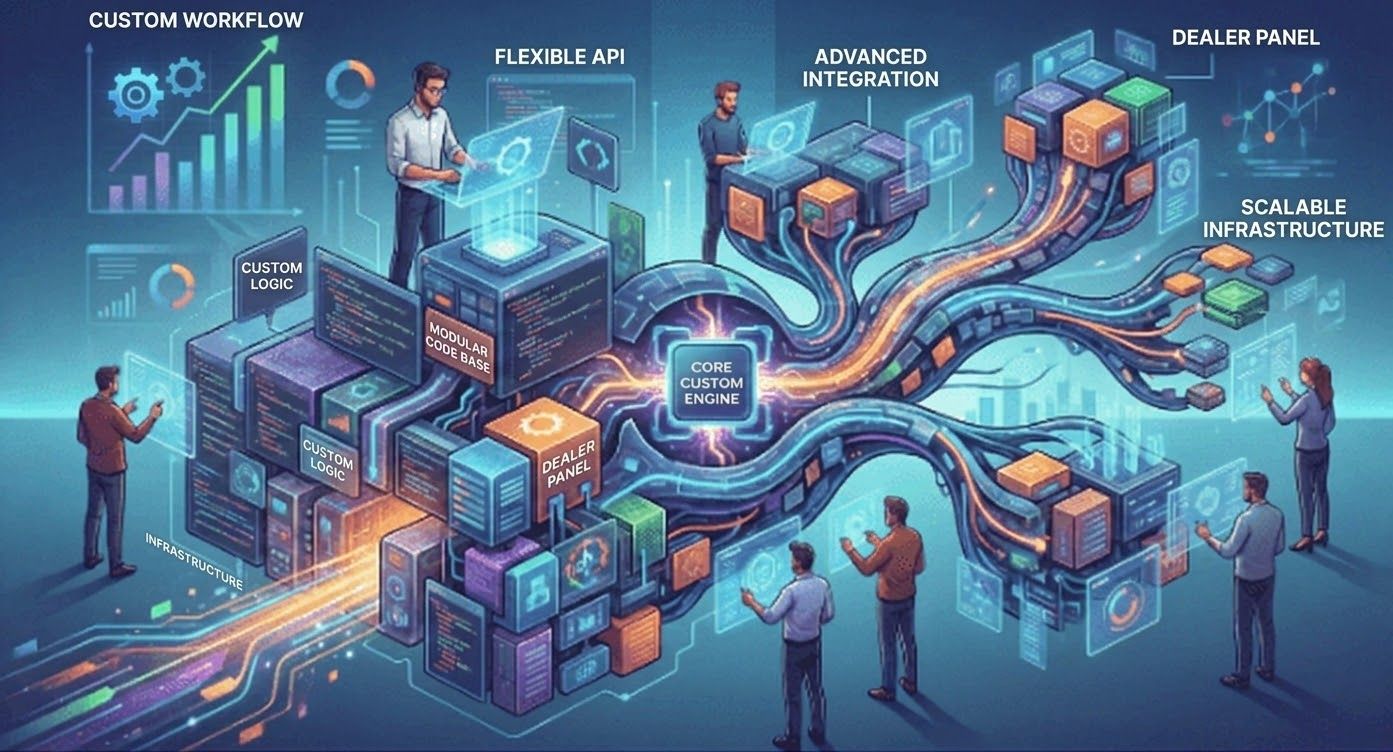
The operating limits of off-the-shelf systems are predetermined, and processes are organized within these limits. On the other hand, in custom software, the system is shaped around the business's business model. It offers opportunities such as adding new modules, creating comprehensive integrations, and adapting to the growth targets of the business. Therefore, scalability is of great importance for companies with long-term growth plans.
Cost Analysis
Often, off-the-shelf systems seem more attractive with their initial costs. However, in the later stages of the business, requirements such as an increase in the number of users, additional feature needs, or integration with other systems can increase expenses faster than anticipated. Investing in custom web software, on the other hand, requires a larger budget initially. However, considering the control and sustainability advantages it provides in the long run, this investment often amortizes itself many times over. Therefore, to make the right choice, it is crucial to comprehensively analyze the total cost of ownership.
Process Alignment and Control
In off-the-shelf systems, business processes often have to adapt to the existing software. Processes run within the standard framework offered by the system, and going beyond these limits is generally restricted. In cases where workflows are standard, this structure is usually sufficient; however, flexibility decreases significantly in complex and customized processes.
In contrast, in custom software solutions, the software is tailored according to the needs of the business. Business processes are subjected to a detailed analysis, and the system is designed accordingly. This situation provides a significant advantage in terms of increasing operational control, reducing error rates, and improving overall efficiency. Especially in businesses with complex and entirely company-specific workflows, off-the-shelf systems tend to fall short in the long run.
Integration Capability
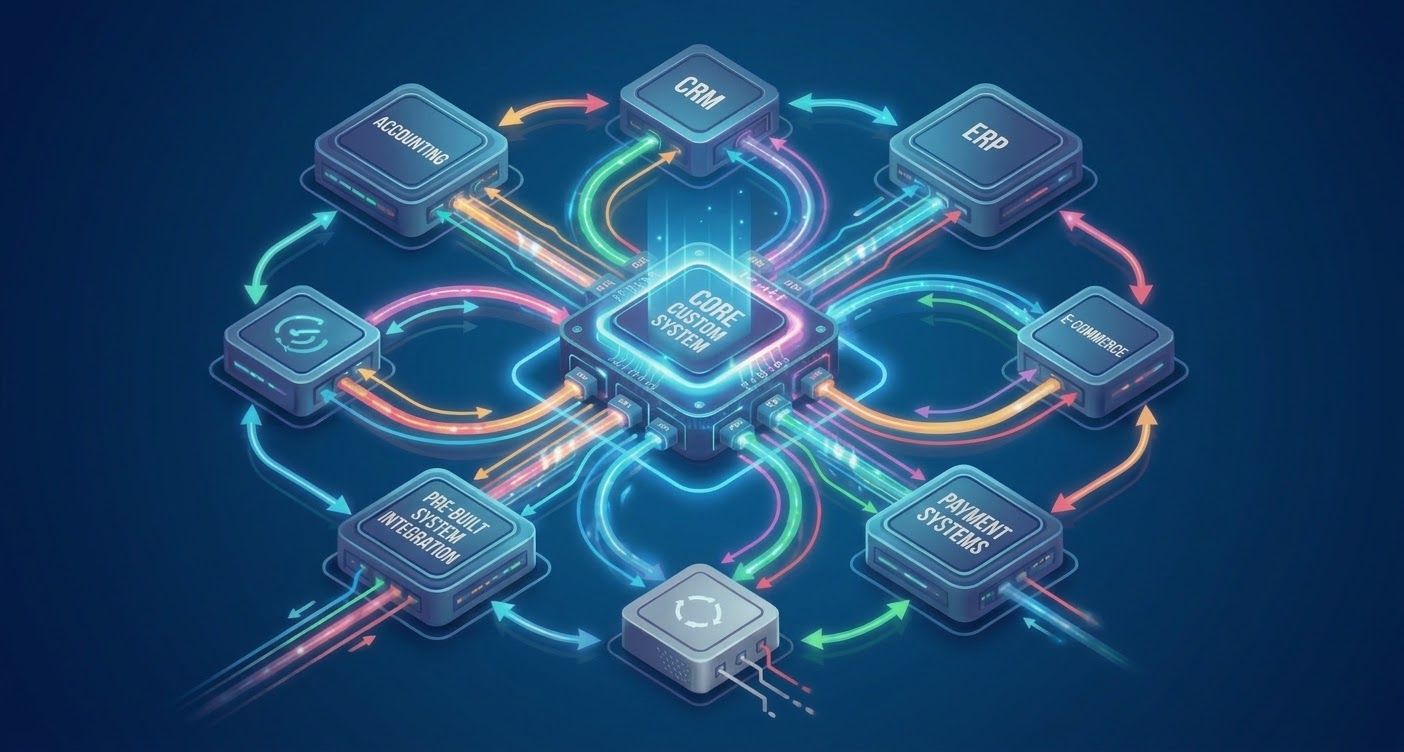
Integration capability refers to a software's capacity to work harmoniously with different systems. It is clear that ensuring seamless data flow between various tools such as accounting programs, CRM, ERP, e-commerce infrastructures, and payment systems is critically important for increasing operational efficiency.
Off-the-shelf software typically offers specific integration features, and going beyond these features is quite limited. Custom web software, however, can shape the integration structure entirely according to the business's needs. Data flow processes, API connections, and system architecture are designed in line with the business's technical requirements. This approach offers a more flexible, sustainable, and dynamic infrastructure in the long term.
Security and Data Control
In off-the-shelf software, the data infrastructure is usually under the control of the provider company. This situation can cause businesses to have limited control over their data. On the other hand, custom web software grants businesses the freedom to determine their own data architecture and security standards. This feature becomes a determining factor, especially for sectors that handle data with high sensitivity. In short, the flexibility needed in terms of data security and control is generally obtained from custom software.
In Which Situation Should Which Be Preferred?
If you are operating with a standard business model, have low-complexity processes, and want to implement them quickly, an off-the-shelf system might be ideal for you. However, if your work involves more specific processes, you have high integration needs, you are looking for a scalable structure, and you insist that full control should be with you, then custom web software will be the most accurate option. At this point, the fundamental question that will determine your decision should not be questioning which option is cheaper, but rather which option is more sustainable for your business.
Frequently Asked Questions
If my business aims for growth, is an off-the-shelf system sufficient?
In businesses with growth plans, process complexity increases and the need for integration rises. In this case, custom web software offers a more sustainable and flexible infrastructure.
Is it difficult to transition from an off-the-shelf system to custom software?
Transition is possible, but it requires planning for data migration, integration compatibility, and process adaptation. Choosing the right system at the beginning is healthier in the long run.
Is custom software unnecessary for a small-scale business?
For small businesses with standard processes, an off-the-shelf system may be sufficient. However, if there are unique workflows and a growth target, custom software provides an advantage even at an early stage.
Do off-the-shelf systems become costly in the long term?
As the number of users, additional modules, and integration needs increase, the total cost of off-the-shelf systems rises. Decisions should not be made without long-term planning.
Is custom software always a better choice?
- No. Custom software should be preferred according to needs and scale. For simple and standard operations, an off-the-shelf system may be a more practical solution.
What to Consider When Choosing a Software Company?