E-Commerce Setup Mistakes and Solutions | EMK Tech
- Minimize the risk of failure with strategic planning.
- 1. Choosing Infrastructure Without Requirements Analysis
- 2. Focusing Only on Design
- 3. Neglecting SEO Strategy at the Beginning
- 4. Treating Mobile Experience as Secondary
- 5. Ignoring Integration Processes
- 6. Complicating the Checkout Process
- 7. Failing to Set Up Data Analytics
- 8. Focusing on Advertising Without Operational Planning
- 9. Neglecting Security and Trust Factors
- 10. Overlooking Long-Term Scalability
- Frequently Asked Questions
10 Critical Mistakes to Avoid When Setting Up an E-Commerce Site
Minimize the risk of failure with strategic planning.
Stepping into the e-commerce world is about much more than just focusing on a technical process. Most failures stem from **strategic planning deficiencies** rather than technical glitches. Choosing the wrong infrastructure, having an insufficient roadmap, or ignoring the user experience (UX) can cause serious damage to the foundation of e-commerce ventures.
The goal of a successful e-commerce investment is not just to build a website, but to develop an efficient sales, operations, and data management mechanism. Here are the 10 critical mistakes you should avoid in this process:
1. Choosing Infrastructure Without Requirements Analysis
The most common mistake in e-commerce ventures is heading towards popular or ready-made platforms without a detailed needs analysis. Systems chosen before clarifying your business model, product variety, or integration requirements can restrict you as your business grows. When selecting an infrastructure, you must consider not only today's demands but also your **growth targets** for the coming years.
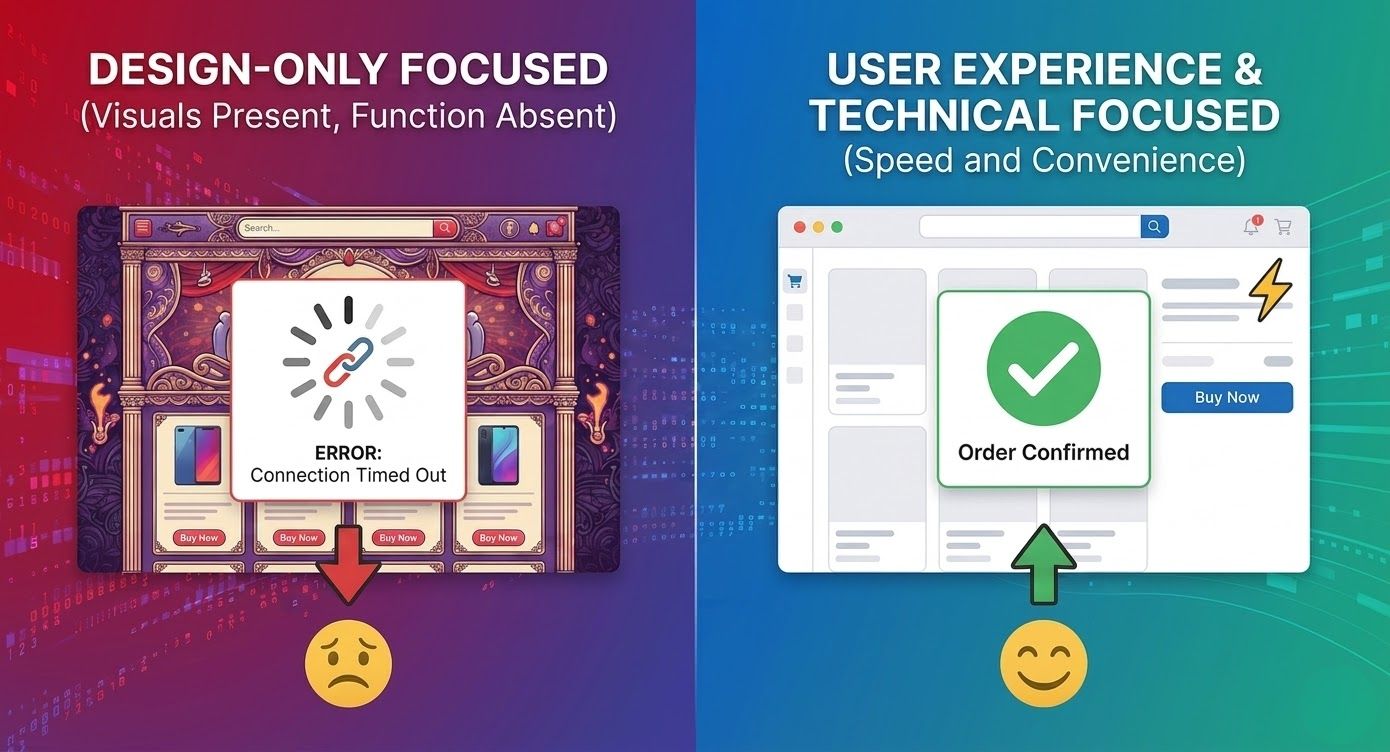
2. Focusing Only on Design
An impressively designed website is undoubtedly important; however, aesthetics alone do not guarantee sales. **User experience (UX), page load speed, and mobile performance** are far more effective factors for success than pure design. A technically inadequate site that only looks good can drain your budget with low conversion rates despite high advertising spend.
3. Neglecting SEO Strategy at the Beginning
Leaving the SEO (Search Engine Optimization) strategy to the final stage is a major financial mistake. A strong SEO foundation must be planned during the category structure, URL architecture, and technical coding phases. Post-launch SEO improvements are both time-consuming and put your search engine rankings at risk.
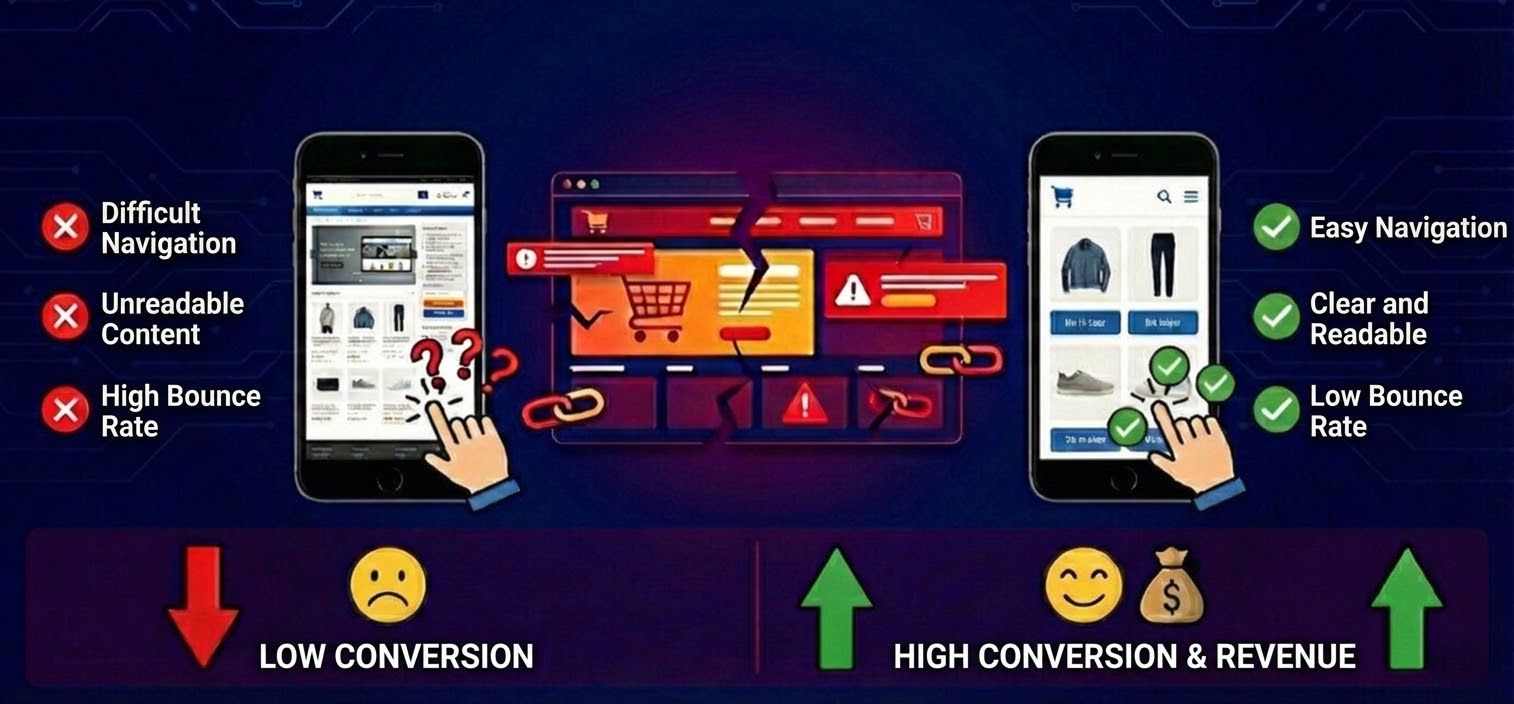
4. Treating Mobile Experience as Secondary
Today, the vast majority of traffic comes from mobile devices. Simply having a "responsive" design is no longer enough. Providing a fast, easy-to-use, and specifically optimized experience for mobile users directly impacts your sales figures.
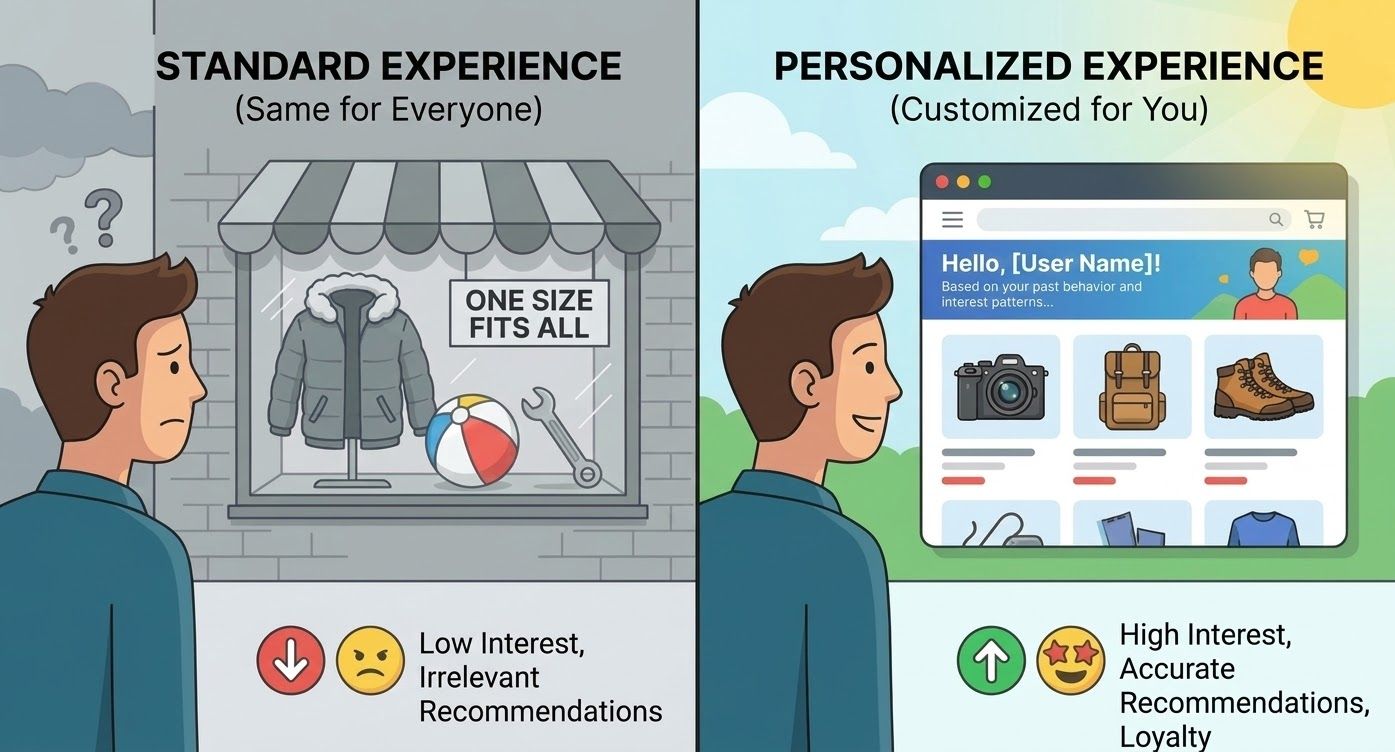
5. Ignoring Integration Processes
Projects launched without planning the integration of critical systems such as accounting, shipping, CRM, and inventory management can turn into operational nightmares. Systems based on manual data entry increase error risks and stand as the biggest obstacle to **scalability**.
6. Complicating the Checkout Process
Long forms and mandatory membership requirements increase cart abandonment rates. To boost conversion rates, a simple, fast, and reliable checkout flow with various payment options must be designed.
7. Failing to Set Up Data Analytics
E-commerce sites managed without analytical data rely entirely on intuition. It is impossible to optimize without measuring traffic sources, conversion rates, and cart abandonment data. **Data-driven decision-making** is the golden rule of e-commerce.
8. Focusing on Advertising Without Operational Planning
High traffic from successful advertising campaigns can damage your brand image if your operational infrastructure (logistics, customer service, etc.) is not ready to handle the volume. Marketing and operations must be scaled simultaneously.
9. Neglecting Security and Trust Factors
Security is a non-negotiable issue in e-commerce. The absence of SSL certificates, lack of legal compliance (GDPR/KVKK), or failing to provide clear contact information negatively affects the user's purchase decision.
10. Overlooking Long-Term Scalability
Systems that seem "enough" at the start can lock up when traffic and order volume increase. Designing your e-commerce site with a scalable architecture that can handle thousands of orders tomorrow is a strategic necessity.
Frequently Asked Questions
- What is the most critical decision when starting an e-commerce site?
Choosing the right infrastructure and technology partner is the most critical decision. The wrong choice may require a complete system overhaul in the future.
- Are ready-made e-commerce packages suitable for every business?
They may be suitable for businesses with standard sales models. However, for structures requiring custom integration and complex processes, custom software solutions are much more viable.
- Can an e-commerce site be successful without SEO?
While ads can drive short-term traffic, SEO is indispensable for sustainable growth and long-term profitability.
- Why is mobile optimization so important?
More than 70% of e-commerce traffic comes from mobile. A site with poor mobile performance will lose the majority of its potential sales.
Summary: Mistakes in e-commerce setup usually stem from a lack of strategic planning. Ignoring SEO, choosing the wrong infrastructure, and operational weaknesses lead to significant long-term costs.
Get Expert Support: Eliminate the margin of error in your e-commerce journey and achieve scalable success. Meet the expertise of EMK Tech.
The Secret to Success in E-Commerce: Online Sales
Custom Software or Ready-Made System? A Guide to the Right Choice for Businesses